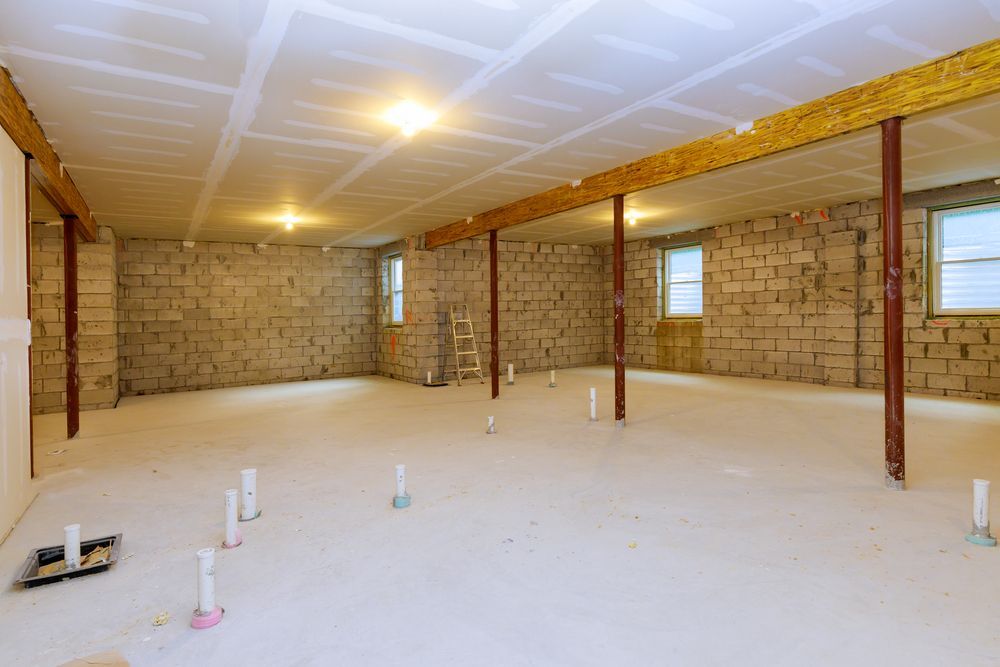

Basements Finished Without Future Mold Problems
Basement Remodeling & Finishing in Cleveland for homeowners ready to add living space after moisture concerns are resolved
Cleveland's freeze-thaw cycles push groundwater through foundation walls and create moisture intrusion that ruins finished basements when the underlying issue goes unaddressed. Homes in Broadview Heights and Middleburg Heights routinely show evidence of water migration during spring thaw and heavy rain events, even when no standing water appears on the floor. Great Lakes Painting and Construction conducts moisture assessments before any framing begins, preventing the mold-behind-drywall problem that develops when basements get finished over damp concrete or active seepage points.
Basement finishing begins with evaluating the foundation for cracks, efflorescence, and moisture vapor transmission rates that indicate whether the space can support finished materials or requires remediation first. Framing installed against damp concrete eventually wicks moisture into wood, insulation, and drywall, creating conditions where mold grows undetected until finishes fail or odors become noticeable.
Schedule a moisture assessment to determine whether your basement is ready for finishing or requires sealing and drainage work first.
How Moisture Assessment Prevents the Most Common Failure
Moisture assessment involves testing concrete surfaces for vapor transmission, inspecting cracks and joints for active seepage, and evaluating grading and drainage around the foundation perimeter. Basements that show elevated moisture levels require sealing treatments, exterior drainage corrections, or interior drain tile systems before finishing materials go up. Skipping this evaluation leads to finished spaces that develop musty odors, peeling paint, warped flooring, and visible mold within two to three years as trapped moisture accumulates behind walls.
Once basement remodeling completes, you'll notice dry walls and floors that remain free of musty odors, finishes that stay intact without bubbling or discoloration, and insulation that doesn't compress or develop mold growth. Flooring remains level and undamaged because the slab underneath stays dry, and framed walls don't shift or bow from moisture-related wood movement.
Finished basements also include proper egress windows if the space will serve as a bedroom, updated electrical circuits that meet code for living areas, and HVAC extensions that maintain consistent temperature and humidity levels year-round. Vapor barriers are installed between concrete and framing where needed, and all penetrations for plumbing or utilities are sealed to prevent air and moisture leakage.
Common Questions About Basement Finishing
Cleveland homeowners finishing basements in older homes want to understand moisture risks, code requirements, and what separates durable installations from ones that fail prematurely.
What does a moisture assessment involve?
The assessment includes surface moisture meter readings on concrete, visual inspection for efflorescence or staining that indicates water intrusion, and evaluation of exterior grading and downspout discharge to identify sources of moisture migration into the foundation.
How much does moisture remediation add to a basement finishing project?
Remediation costs vary depending on whether the solution involves exterior drainage work, interior sealing treatments, or drain tile installation, but addressing moisture before finishing prevents total loss of the finished space within a few years.
Why do freeze-thaw cycles in Northeast Ohio affect basements more than other regions?
Repeated freezing and thawing throughout Cleveland winters forces water into foundation cracks and porous concrete, where it expands and creates pathways for ongoing moisture intrusion that doesn't occur in climates with stable winter temperatures.
What code requirements apply to finished basements in Cleveland?
Finished basements used as living space require egress windows for emergency exit, smoke and carbon monoxide detectors, dedicated electrical circuits for outlets and lighting, and ceiling height minimums that vary depending on whether the space includes bedrooms.
When is the best time to finish a basement in Cleveland?
Fall and winter allow for interior work without conflicts from exterior drainage projects, and contractors can complete moisture assessments during wet seasons when seepage is most visible and active.
Great Lakes Painting and Construction finishes basements in Cleveland only after moisture conditions are evaluated and addressed, ensuring that finished spaces remain dry and livable for decades. Set up a basement assessment to determine what preparation your foundation requires before finishing work begins.