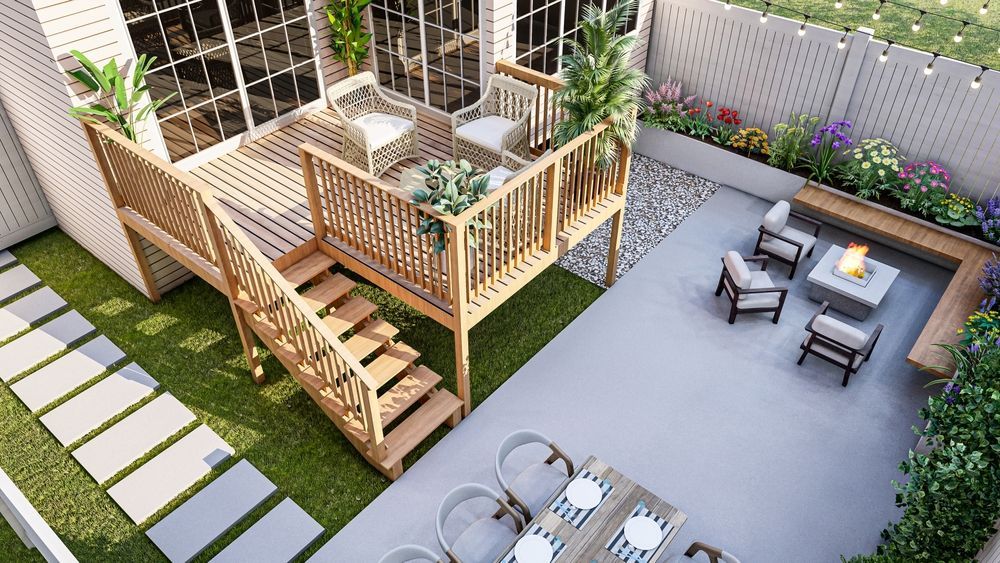

Outdoor Living Space Built for Northern Summers
Custom Decks & Construction in Cleveland for homeowners maximizing usable outdoor months with durable, code-compliant structures
Short Cleveland summers make outdoor living space a high-priority investment for homeowners who want to extend time spent outside before fall weather arrives. Great Lakes Painting and Construction focuses on ledger board attachment and flashing detail during deck construction, addressing the connection point that fails on poorly built decks and voids homeowner insurance claims when collapse or separation occurs. Homes in Bay Village and North Olmsted frequently have siding, brick, or stucco cladding that requires specific fastening methods and water management to prevent structural failure where the deck attaches to the house.
Custom deck construction involves through-bolting the ledger board into the home's rim joist or foundation, installing flashing above the ledger to divert water away from the connection, and spacing fasteners according to load requirements determined by deck size and expected use. Many deck failures trace back to inadequate fastening or missing flashing that allows water infiltration behind the ledger, rotting the attachment point until the deck separates from the house under load.
Request a site evaluation to review your property's layout and discuss deck design options suited to your outdoor space and usage needs.
What Proper Ledger Attachment Actually Requires
Ledger board installation requires removing siding or cladding where the board will attach, through-bolting with galvanized or stainless fasteners into solid framing, and installing metal flashing that extends up behind the weather barrier and laps over the top edge of the ledger. The flashing directs water out and away from the connection rather than allowing it to pool or seep between the ledger and the house, which eventually rots the wood and compromises structural integrity. Decks built without proper flashing develop hidden decay that becomes evident only when movement or sagging signals that the attachment has failed.
After deck construction completes, you'll notice a structure that remains stable without lateral movement or bounce, ledger connections that stay dry and free of rot even after years of exposure, and flashing that keeps water from penetrating the building envelope where the deck attaches. Decking boards remain level and properly spaced for drainage, and railings meet code height and spacing requirements for safety.
The construction also includes footings poured below the frost line to prevent heaving during freeze-thaw cycles, joists and beams sized for the span and expected load, and hardware that resists corrosion from moisture and de-icing salt exposure common in Northeast Ohio winters. Post anchors are embedded in concrete rather than set on grade, and all lumber is rated for ground contact where applicable.
What Property Owners Usually Ask
Homeowners planning custom deck construction in Cleveland typically want to understand structural requirements, material durability, and how proper installation prevents the failures that lead to costly repairs or insurance issues.
What is ledger board flashing and why does it matter?
Flashing is a metal strip installed above the ledger that directs water away from the connection point between the deck and house, preventing rot and structural failure that occurs when moisture infiltrates behind the ledger and decays the attachment.
How deep do deck footings need to go in Cleveland?
Footings must extend at least 42 inches below grade to reach below the frost line and prevent heaving caused by freeze-thaw cycles that shift and destabilize the deck structure during winter months.
Why do insurance claims get denied for deck failures?
Claims are denied when inspections reveal that the deck was not built to code, particularly when ledger boards lack proper through-bolting or flashing, because those deficiencies indicate construction negligence rather than accidental failure.
What decking materials hold up best in Northeast Ohio?
Pressure-treated lumber, composite decking, and PVC boards all perform well when properly installed, with composites offering lower maintenance and pressure-treated lumber providing the most cost-effective option for homeowners willing to perform periodic sealing and staining.
When should homeowners schedule deck construction to ensure completion before summer?
Construction scheduled for early spring allows for permitting, material delivery, and installation to finish before Memorial Day, maximizing usable outdoor months during Cleveland's short warm season.
Great Lakes Painting and Construction builds custom decks with code-compliant ledger attachment and flashing details that prevent the structural failures common in rushed or improperly constructed installations. Arrange a design consultation to discuss your outdoor living goals and review construction methods specific to your home's structure and site conditions.